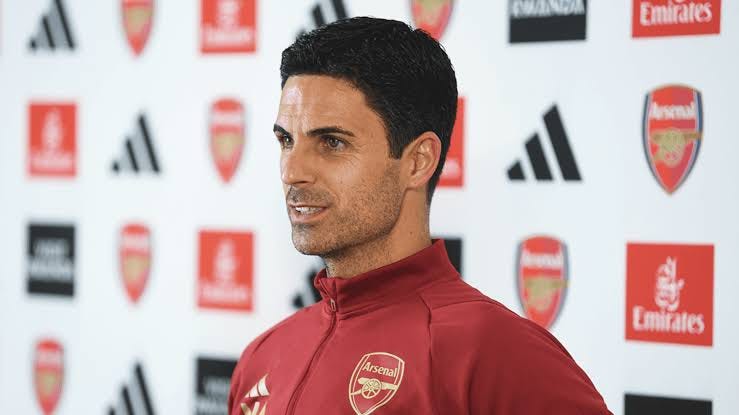
So the managers have now had their say. And with that, we have from both of them the following:
Mikel Arteta
-
Perspective before performance – Mikel started with humanity. A reminder that context matters, and that leadership isn’t just about the next result – it’s about grounding people before asking more of them.
-
Adaptability is the real constant – He talked about how injuries aren’t drama, they’re data. The message is simple: we’ve dealt with it all season, we’ll deal with it again. No noise, just solutions.
-
Control the controllables – No chat about draws, permutations, or what others might do. He was very binary about the preparation – you play to win the next game, full stop.
-
Mindset isn’t fluffy – it’s decisive – Talent gets you in the conversation. Mentality keeps you there. Arteta was explicit that this is an area they’ve worked hard on – and now have to prove again.
-
Pressure reframed as privilege – Instead of fearing the moment, he reframes it. Being here is earned. That mindset shift matters when the stakes are high.
-
Learn fast, don’t linger – Past losses and external noise aren’t baggage – they’re fuel. Take the lesson, feel it briefly, then channel it productively into what’s next.
I think it’s the right approach ahead of a huge game and, unlike last weekend, there wasn’t any need to do the whole ‘fire’ or ‘bring your dinner’ stuff. He knows that this game is already being built up so much by everyone that we need to dial it down a bit. I do wonder if the players are feeling that, though. We heard from Eze ahead of Sporting, and he was chill; Rice was also very focused but saying all the right things in a Sky Sports interview. But I worry that the actions of the players of late have shown a different side, a side that is feeling the weight of expectation, a side that is running out of gas whilst also dropping like flies on the injury front.
To that end, the absence of Saka is a real blow, and I think at this stage, we probably have to start thinking about him as an optional extra now, for the rest of this season. He’s struggling with an Achilles injury, and he won’t be in the squad tomorrow, meaning his last game was over a month ago. There’s no way he’s going to be back in the starting XI next Saturday against Newcastle, which means we’ll probably also only see him as a bit-part player for the first leg of the semi-final of the Champions League. It means we need to see more from Noni, who, at least, Arteta confirmed, should be ok. As usual, he wouldn’t be drawn on which players are fit, saying that some players are ‘close’, but he said that last weekend and ahead of Sporting, so whether they are fit remains to be seen. I think all of us are desperate to see Timber back, for sure, because Doku might be licking his lips if he’s up against White or Mosquera. Equally, having Calafiori available would be a big boost, even if he’s not fit to start, with Hincapie and him able to share minutes. Hincapie was restricted in the League Cup Final because of that ridiculous yellow card that wouldn’t have been a yellow, but I wonder if this time, if that were to happen again, Arteta would bring on Riccardo earlier if he had to. I certainly hope so.
Pep Guardiola
- Calm realism, not drama – Pep was a little matter-of-fact about injuries and circumstances. Players will be missing, that’s the season. No emotional charge, just acceptance and adjustment.
- Success is contextual, not emotional – He was clear that winning the title this season wouldn’t be framed as his “greatest achievement”. That’s telling. Perspective matters when you’ve been there before.
- Respect without obsession – He acknowledged that Arsenal are the benchmark this season – consistently strong, improving year on year. Respect is clear, but it doesn’t tip into fixation.
- Big games are still just games – Even with the stakes obvious, he strips the occasion back to performance basics. Execute well, compete properly, and control what you can.
- Pressure reframed as opportunity – Six points is a gap, not a crisis. Home crowd, sold-out stadium, everything aligned to try – not to panic. His was a message of readiness over rhetoric.
- Clarity on what will decide it – Guardiola was precise about the challenge: physical duels, aggression, second balls, build-up quality. No vague talk of “desire” – just clear performance realities.
For them, the requirement is clear, and I wonder if ‘the title is over if we don’t win’ will work in their favour tomorrow or not. I think it will certainly fire everyone up, and I think those first 15 – 20 minutes or so tomorrow will be a bit of a cauldron, as their fans are unusually loud, whilst their players will be massively aggressive in trying to get ahead early, I suspect. As I said yesterday, the numbers favour that early goal, so we have to make sure we don’t go behind. As I was on my run yesterday, I was listening to the always excellent Arsenal Opinion Podcast, and the lads were quite bullish about our chances. But what Matt said on his ‘hot take’ really resonated with me: The first goal wins the league. It’s a deliberately provocative take, which is kind of the point, but it does feel significant. When Arsenal go behind, we tend not to win football matches, and City have a history of scoring early against us and going on to win. But even against other teams, we know we’re not a side that goes on to win football matches if we score first. This season, we’ve beaten Newcastle when going behind, but that’s all I could find for this season. In 2024/25 it was three wins in total. In 23/24 it was three times again. So we don’t exactly have a habit of making comebacks. The data tells us City scores first, and we don’t do well coming from behind. If we’re going to get anything from this game, it does feel like we’re going to need to score first.
And that is what I will leave you to ponder on today, my friends, so have a good one, and I’ll be back tomorrow with a match preview.
Laters.
PakarPBN
A Private Blog Network (PBN) is a collection of websites that are controlled by a single individual or organization and used primarily to build backlinks to a “money site” in order to influence its ranking in search engines such as Google. The core idea behind a PBN is based on the importance of backlinks in Google’s ranking algorithm. Since Google views backlinks as signals of authority and trust, some website owners attempt to artificially create these signals through a controlled network of sites.
In a typical PBN setup, the owner acquires expired or aged domains that already have existing authority, backlinks, and history. These domains are rebuilt with new content and hosted separately, often using different IP addresses, hosting providers, themes, and ownership details to make them appear unrelated. Within the content published on these sites, links are strategically placed that point to the main website the owner wants to rank higher. By doing this, the owner attempts to pass link equity (also known as “link juice”) from the PBN sites to the target website.
The purpose of a PBN is to give the impression that the target website is naturally earning links from multiple independent sources. If done effectively, this can temporarily improve keyword rankings, increase organic visibility, and drive more traffic from search results.
